

 +1-800-267-5763


Chemical Burns Learning Module
Ocular chemical burns are ophthalmic emergencies requiring immediate assessment and treatment to minimize tissue damage and preserve vision.
This case-based learning module provides a clinically focused overview of ocular chemical burns across the acute, subacute and chronic phases of care. Learners will review the mechanisms and clinical presentation of acid and alkali injuries, important prognostic indicators, evidence-based medical and surgical management, and potential long-term complications.
By completing this module, participants will be able to:
- Understand the pathophysiology of chemical injuries to the ocular surface
- Recognize acid and alkali burns, their prognostic indicators and early signs of limbal ischemia
- Identify the key steps in acute assessment and management
- Review strategies for subacute and chronic management
- Understand long-term complications and their effect on visual prognosis
Target audience: Practising ophthalmologists, ophthalmology residents and medical students
Authors:
- Dr. Edmond Sandouk, Ophthalmology Research Fellow, Centre hospitalier de l’Université de Montréal
- Dr. Michael Mina, Ophthalmology Resident, Centre hospitalier de l’Université de Montréal
- Dr. Mona Harissi-Dagher, Ophthalmologist, Centre hospitalier de l’Université de Montréal
Introducing the INNOVA Kickstart Program
For New Grads Building the Practice They Envision
Starting your career is exciting, and building your future practice can feel like a big step. That’s why INNOVA created the Kickstart Program, designed specifically to support new graduates as they plan for what’s next.
Step 1: Activate Your $500 Kickstart Credit
Book a one-on-one consultation with your local INNOVA representative to unlock a $500 Kickstart Credit.
During your consultation, you’ll have the opportunity to discuss:
* Equipment planning and recommendations
* Practice workflow guidance
* Financing insights
* New clinic and build coordination support
* Technology solutions tailored to your goals
Step 2: Unlock Up to $12,000 in Practice Growth Credits
As you invest in your new clinic, you may be eligible to earn valuable credits that can be reinvested back into your practice, helping support your growth as you get started.
Please review the Kickstart Program details in the attached PDF, or visit the link below to learn more about the program and available benefits.
Whether you’re exploring your options, planning a new clinic, or preparing for ownership, the INNOVA Kickstart Program is here to help you take the next step with confidence.
The Retina Society 59th Annual Meeting
59th Annual Scientific Meeting
September 23-26, 2026 – Los Angeles, California
Registration is open!
Early bird deadline is August 1st!
We look forward to seeing you this fall!
57th Sally Letson Symposium
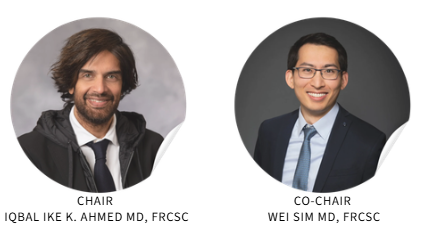
Join us from September 24-26, 2026 in Ottawa for the 57th Sally Letson Symposium.
“Reimagining Glaucoma Care Together” will bring together world leaders in ophthalmology, neuroscience, artificial intelligence and digital health to explore the cutting edge of glaucoma diagnosis, monitoring and management. This dynamic symposium will highlight practical innovations ready for clinical integration from AI-powered diagnostics and next-generation therapeutics to digital health tools and personalized precision medicine . Designed to spark collaboration between eye care practitioners, researchers, and technologists, this event aims to move beyond theory to tangible solutions that preserve sight and transform patient outcomes.
Over the course of 2.5 days, the program will delve into the realm of ophthalmology with top experts, captivating lectures, interactive learning and cutting-edge insights that will elevate your learning and practice. Seize this opportunity to enrich your knowledge and skills in this vital field, all while earning Section 1 MOC credits!
Learning Objectives
At the end of the symposium, participants will be able to:
1. Evaluate emerging innovations in glaucoma diagnostics, including AI-enabled imaging, risk-prediction tools, and assessment technologies, and describe how they can support earlier and more accurate detection.
2. Assess current and next-generation therapeutic options—pharmacologic, surgical, device-based, neuroprotection, and gene therapy—and determine how these advances can be integrated into personalized treatment plans to optimize patient outcomes.
3. Collaborate across clinical, research, and technology domains to co-create practical workflows, referral models, and interdisciplinary approaches that improve screening, monitoring, and treatment adherence
CanMEDS: Medical expert, Collaborator
Target Audience: This symposium is designed for attendance by ophthalmologists, ophthalmology fellows and residents, optometrists, orthoptists, medical students, technologists, nurses, and other allied health professionals.
Location: Westin Ottawa, 11 Colonel By Drive, Ottawa, ON K1N 9H4
2027 COS Annual Meeting and Exhibition

The COS Annual Meeting and Exhibition will take place from June 24-27, 2027 in Ottawa, Ontario.
Join us at the Rogers Centre (previously the Shaw Centre) where ophthalmologists and eye care professionals from across the spectrum of vision health, from research to patient care, will come together.
This meeting boasts an outstanding international and Canadian faculty presenting the latest in ophthalmic research and practice. The COS Annual Meeting and Exhibition includes invited lectures, scientific papers, wet labs and workshops, as well as networking opportunities and an extensive exhibition of ophthalmic equipment and services.
Learning Objectives
By participating in this year’s meeting, attendees will:
- Integrate into their practice, knowledge and skills gained from the sharing of Canadian and international research and scientific studies
- Discuss recent advances in the diagnosis and treatment of eye diseases
- Compare and contrast core concepts, new advances and clinical experiences by networking with colleagues and internationally renowned keynote speakers
- Enhance or develop new skills through innovative hands-on learning experiences in Self-Assessment Program (SAPs) and Surgical Skills Transfer Course (STCs)
- Appraise new and innovative technology and discuss developments in treatment and medical devices with industry representatives in the Exhibition Hall
AAO (The American Academy of Ophthalmology) 2026
Key Dates
- Aug. 5: Early registration fee deadline. Fees increase Aug. 6.
- Sept. 9: Advance pricing fee deadline. Fees increase Sept. 10.
Why Attend AAO 2026
- Unparalleled networking
- World-class hands-on labs and Skills Transfer courses
- Global experts on stage including Janet L. Davis, MD and Robert Wachter, MD
- The latest technology and unique experiences at the largest ophthalmology Expo
- CME opportunities
AAO (The American Academy of Ophthalmology) 2027
Las Vegas, Venetian Expo & Hotel
- Nov. 12-15: AAO 2027
- Nov. 13-15: AAO 2027 Expo
- Nov. 12-15: AAOE® Practice Management Program and AAOP™ Clinical Teams Program
- Nov. 12-13: Subspecialty Day 2027
Special Focus Meeting 2027 – Inherited Retinal Diseases
26-27 February 2027
Venue TBC, Ljubljana, Slovenia
The Retina Society 60th Annual Meeting
SAVE THE DATE!
60th Annual Meeting 2027 – Boston
Wednesday to Saturday, October 20-23, 2027
OMNI Boston at the Seaport