

 +1-800-267-5763


Indirect ophthalmoscopy is an essential tool for examination of the peripheral retina. It is a beautifully designed optical instrument for detecting and treating important sight-threatening pathology. However, it is also a physically demanding technique that forces the neck and back into unnatural positions of tilt and hyperflexion. Not only is this strenuous at the time of the exam, but it creates potentially excessive stress on the paraspinal muscles, ligaments, and tendons. Combined with the intense pace of a busy high-volume clinic, it is the perfect recipe for career ending disk herniation, stenosis, or nerve impingement.
In order to reduce the detrimental effects:
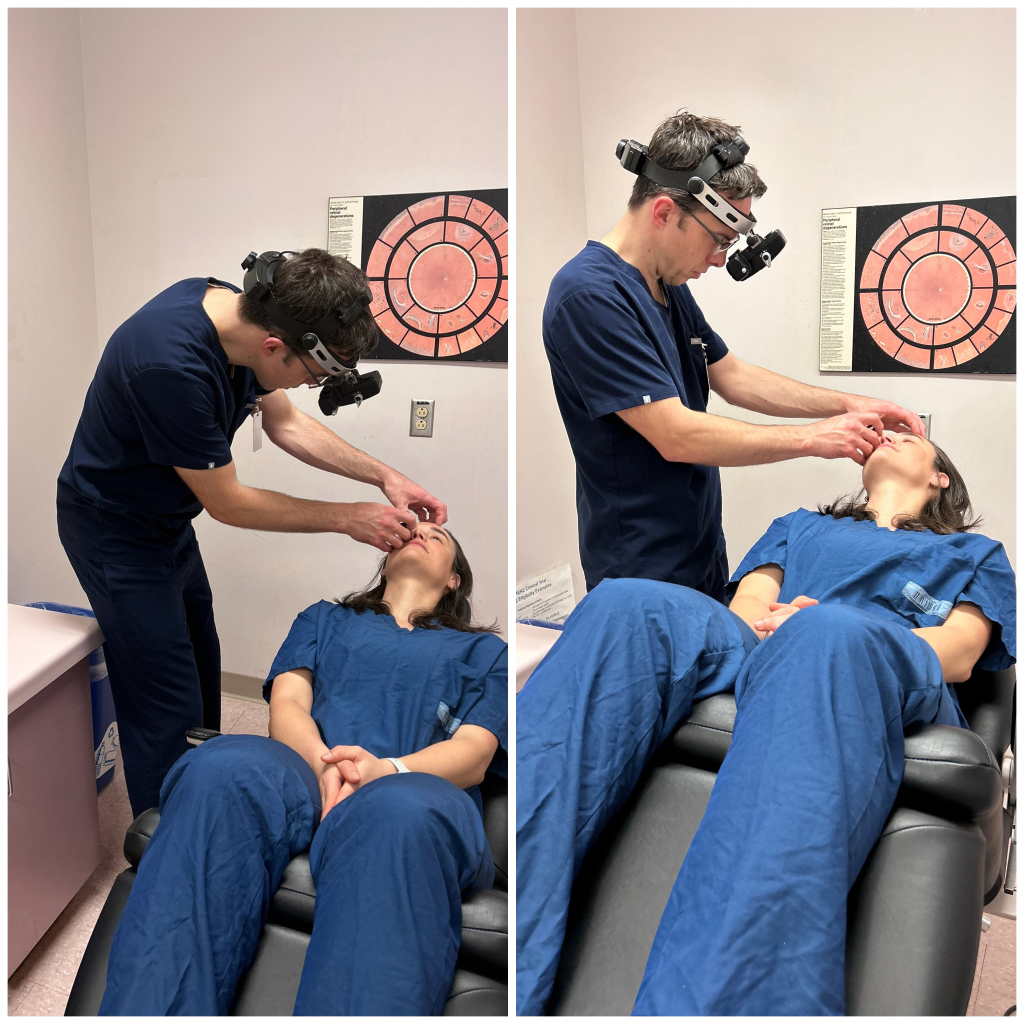
- Optimize the patient’s head position by tilting it 30-45 degrees towards you.
- Walk around the patient’s head while examining them to avoid twisting or craning your neck and back. Position your body to remain 180 degrees opposite to the fundus location you are examining, whenever possible.
- Avoid excessive hunching. Keep your neck and back in as neutral a position as possible by elevating the patient’s chair height as high as possible to avoid crouching over.
- Procure yourself a lighter-weight indirect ophthalmoscope in order to reduce the weight on your neck and shoulders.
- Take breaks. This applies especially to learners. If your patient is getting tired and so are you, take a break, begin documenting your findings, have a stretch, and resume.
- Stay fit. A healthy lifestyle and regular exercise, incorporating stretching and strength training, will help keep your joints mobile and more forgiving.
In summary, indirect ophthalmoscopy is challenging enough as it is. Next time you are hunting through vitreous hemorrhage for a retinal tear, please consider incorporating some of these ergonomics tips. Your neck (and the rest of your body) will thank you!
The earlier that proper positioning is adopted and becomes habit, the less likely that potentially career-threatening musculoskeletal injuries will develop.
Michael Dollin, MD, FRCSC
Ergonomics and Injury Prevention Working Group